 This time last year, we were looking forward to a new year with optimism and hope. Some of us were probably contemplating their new year's resolutions and others of us were making party plans. While each new year brings a chance at a fresh start, there was something especially tantalizing about the perfect symmetry of 2020.
Of course, 2020 turned everything on its head. And those new year's resolutions, forget about it!
With the pandemic shutting down a number of sectors in our economy, leading to a rise in unemployment rates, there has been speculation about whether there will be more foreclosures on the horizon in 2021. Here's why economists don't expect to see a rise in foreclosures or believe there will be minimal impacts to the housing market:
- Many home owners are sitting on quite a bit of equity, unlike during the last recession where many homeowners found themselves upside down on their mortgage loan. This gives today's home owners who may find themselves in financial distress, the option of selling their home rather than going into foreclosure, while still being able to make some profit from the sale.
- Mortgage lenders were quick to offer solutions in the way of forbearance (delaying making payments on your mortgage for a set period of time) to homeowners at the start of the pandemic. This allowed homeowners to stay in their homes.
-Of the number of homeowners who requested forbearance at the start of the pandemic, 48% have already come out of forbearance or paid those missed months of mortgage off.
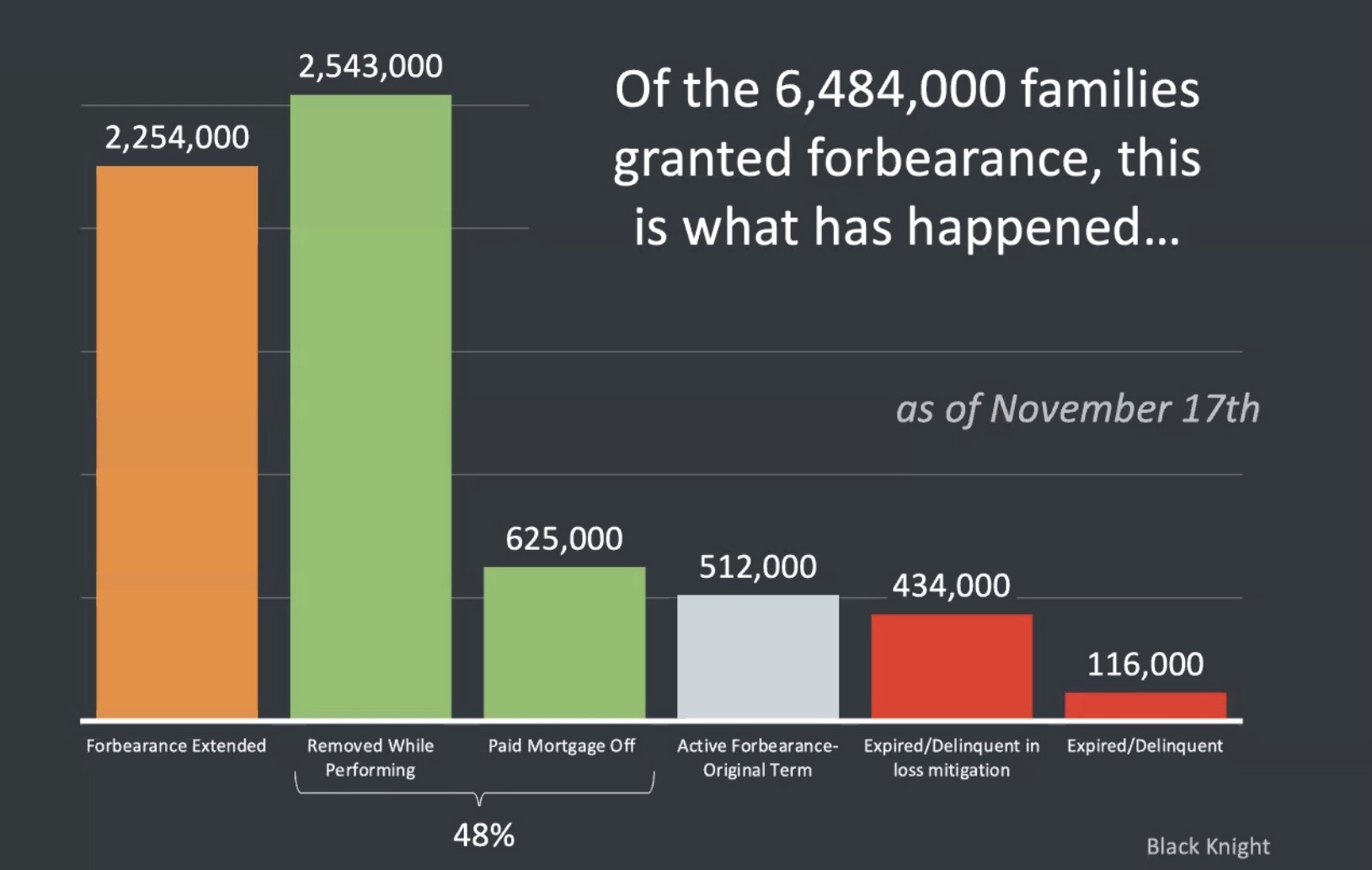
credit: keeping current matters - Home inventory is low, so any distressed properties that do hit the market are likely to get snapped up quickly, rather than sit on the market for long.
- mortgage interest rates remain low, enticing more home buyers to the market
- working from home has led many individuals to re-evaluate their housing needs and move. According to realtor.com, "more and more workers are finding the freedom to work remotely. This has sparked intense interest in suburban homes, further exaggerating a trend that has been slowly emerging over the last couple of years. If companies commit long-term to remote work, demand for these homes could see an additional boost in 2021."
One thing to keep in mind: a recession does not equal a drop in home values or prices. In fact, in 4 of the last 6 recessions, home values grew! The major exception of course, was the 2008 recession, which was caused in large part by faulty mortgage lending practices and thus directly tied to the real estate market. Today's lending criteria is more stringent and thorough.

Also see: Are we in a housing bubble?
Contact me for more information!